

Concrete is the second most used material in the world after water and the cement industry alone accounts for roughly 8% of global carbon emissions.
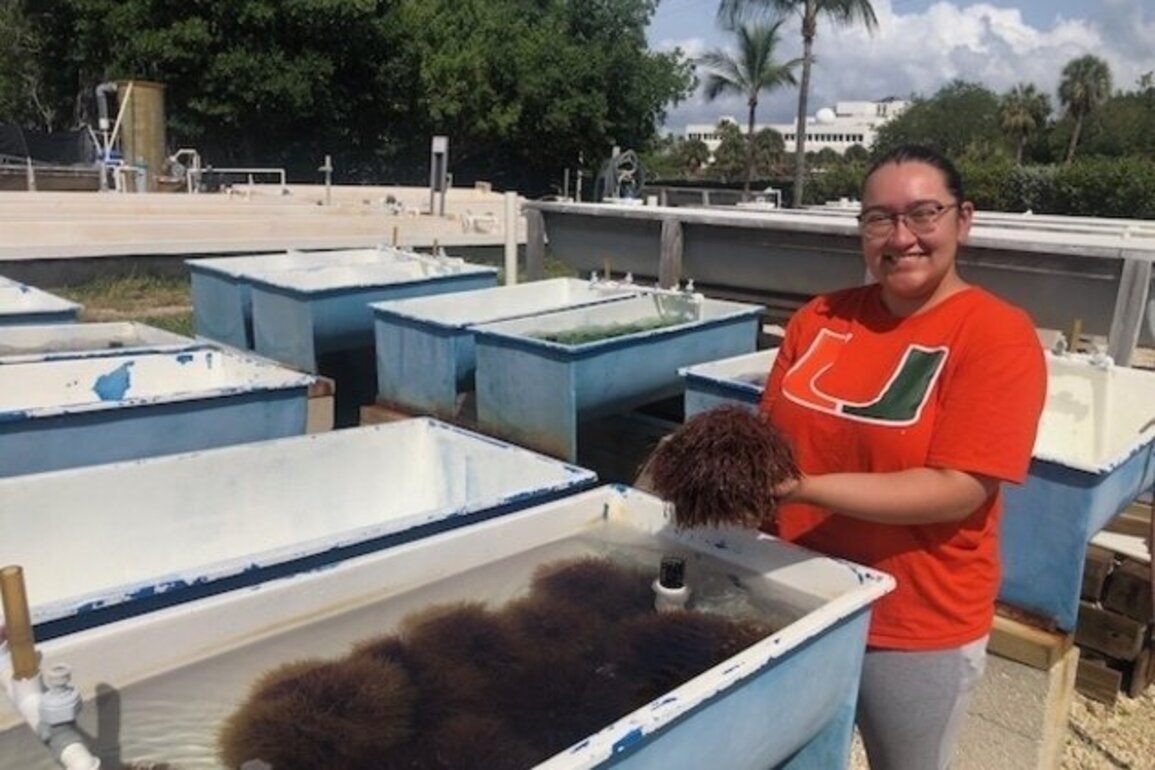
Researchers at the University of Miami are tackling the problem by turning algae into a sustainable concrete additive. They are partnering with an aquaculture lab on the university's campus in Key Biscayne, which grows Florida native algae for research purposes.
Jasmine Rodriguez, a first-year doctoral student in civil engineering, said the goal is to significantly reduce concrete's climate effects and for her team, it starts with the algae grown just minutes from their lab.
"Which we then turn into a biochar, which is basically like a charcoal material made of that algae," Rodriguez explained. "Which we can then functionalize, which is chemically treating it in order to make it easier to replace in higher contents of cement."
The challenge, Rodriguez pointed out, is replacing too much cement with biochar can compromise concrete's strength. The team is developing techniques to make the biochar more chemically reactive so it bonds better with cement. The researchers will present their work at the Climate Correction Conference in Orlando March 10-11.
Farzad Rezaeicherati, another doctoral student in civil engineering, said the team is exploring multiple strategies to lock carbon into concrete permanently. Beyond replacing cement with carbon-rich algae biochar, they are also experimenting with what is known as carbon curing.
"In this way, we are going to store carbon dioxide in a stable shape in concrete," Rezaeicherati outlined. "This is another way to reduce carbon emissions through carbon sequestration through these materials that we have."
The research team received a $25,000 grant through VoLo Foundation's VISTA Award. The funding will help the group purchase updated equipment to better control the production of biochar.
Rodriguez noted while the technology is still in the experimental stage, the long-term goal is to patent their techniques and eventually establish industry partners to bring Florida-grown sustainable concrete to the market.
Source: Public News Service